Why Betty Magnolia Is Sold in Containers Instead of Bare-Root
Tip a Betty out of its pot and the answer to this question is right there in your hands. The roots are thick, pale and fleshy, wrapped around the soil like a fist of fat white fingers. They look nothing like the wiry thatch you pull from a potted shrub. A rose arrives as a bundle of dormant sticks, so people reasonably ask why a magnolia never does.
Below, you'll find out all about why Betty is sold in containers, including how its roots react to drying, whether bare-root really costs less, what balled and burlapped means, and how to inspect any plant before you pay. We often hear that a pot only makes life easier for the seller. For Betty it decides whether you get a tree that opens purplish pink flowers in mid-April or one that sulks for a season and then fails.
Why Betty Magnolia Is Too Fragile for Bare-Root Sale
The belief goes like this: any small tree can be lifted in winter, wrapped up and mailed, and Betty is a small tree. The logic sounds fair, but it ignores what the bare-root system was built for.
What the Bare-Root System Assumes
Bare-root selling suits plants that tolerate being dug and handled while asleep. According to Oregon State University Extension, bare-root roses are dormant plants harvested in late fall through early winter. They travel without soil, packed in peat moss or sawdust to keep the roots damp.
That arrangement depends on roots that shrug off a few days of exposure and a lot of handling. Roses, apples and similar trees fit that description. A magnolia does not, and that is why you almost never see a bare-root Betty in a catalog.
How Nurseries Handle Magnolias Instead
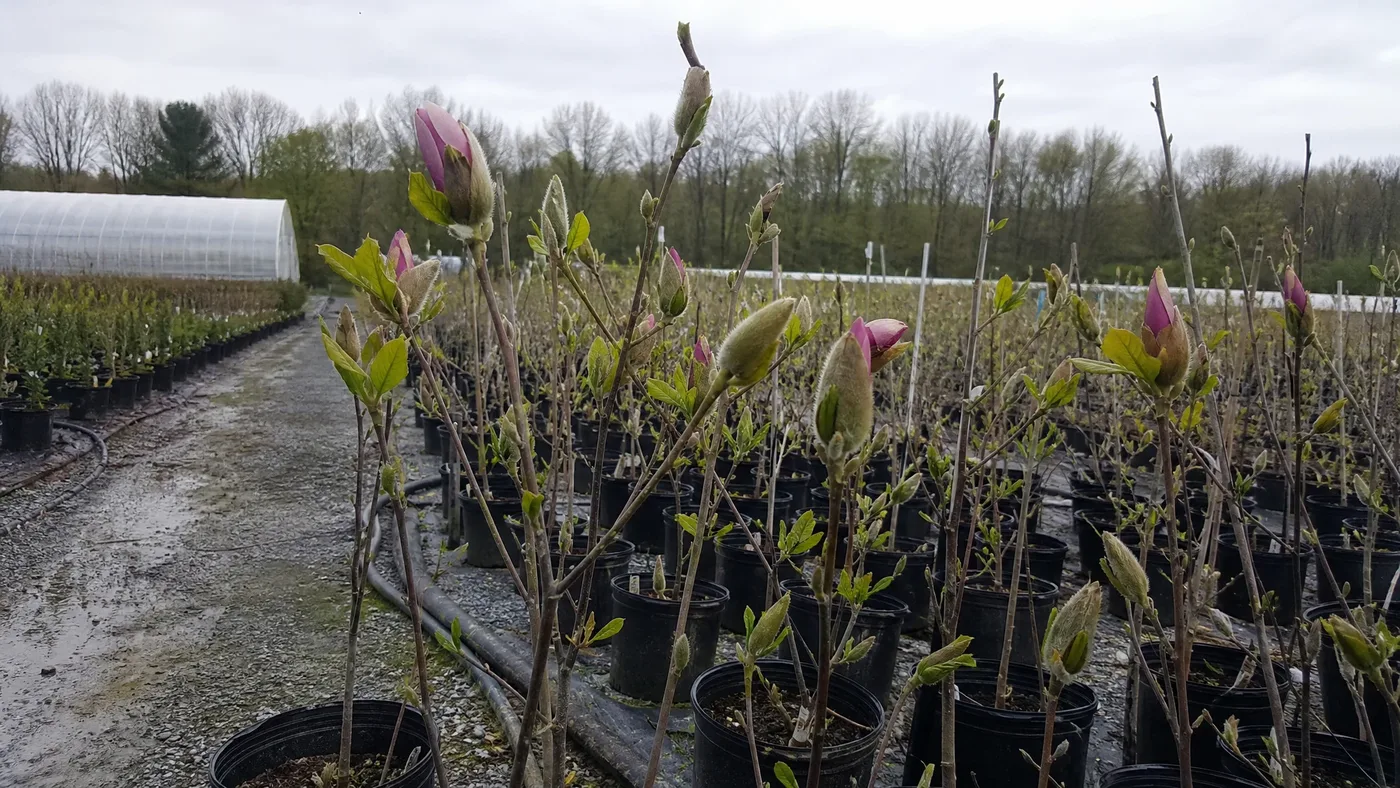
Growers who work with magnolias keep the roots in soil from start to finish. Young plants are raised in containers, and some larger specimens are dug with a soil ball and wrapped. Either way, the root system never sits in open air.
Betty also has a wide hardiness range. The University of Minnesota lists it for zones 4–8, which means winter in a zone 4 yard and winter in a zone 8 yard look very different. A bare plant that lands in a frozen, wet or windy week has nowhere to wait. A potted Betty can sit on a porch or in a protected corner until the weather suits planting.
So the short version is simple. Betty is small enough to tempt the comparison, but its roots belong in soil from nursery row to planting hole.
Why Betty Magnolia Roots Do Not Forgive Drying Out
The real reason is in the roots. Magnolia roots are built differently from the ones that make bare-root sales work, and that changes what a few dry hours can do.
Fleshy Roots Hold Water They Cannot Easily Replace
The difficulty with moving magnolias comes from the tree's thick, fleshy, wide-ranging roots. Those roots store moisture and carry few fine feeder hairs near the cut ends. Once the outside dries, the damage tends to run inward.
Fine, fibrous roots on a rose or a fruit tree are cheap for the plant to replace. A fleshy root is slow and costly to regrow. Betty's roots also stay in the upper layer of soil, as our guide to root rot in Betty Magnolia's shallow roots explains. Wind and sun reach that layer quickly when a root is exposed.
Cut Ends Die Back
When transplanting happens while the roots are not ready to start growing, the cut ends are likely to die back enough to harm the moved tree and endanger its life. A bare-root plant is nothing but cut ends and open air.
That dieback is also hard to see. The branches may look fine for weeks while the root system quietly shrinks, and then the plant fails to leaf out or drops a weak crop of flowers.
A Soak Will Not Fix It
Oregon State suggests soaking bare-root plants in clean water for 2–24 hours to rehydrate roots that dried during shipping and storage. That advice helps roses because their roots usually survive the trip. A soak cannot repair a fleshy magnolia root that has already collapsed, so we do not count on it for Betty.
The Belief That Bare-Root Plants Always Cost Less
Bare-root plants are usually the cheaper option for trees that tolerate the method. Many buyers carry that rule over to Betty and wonder why the potted price looks higher. The rule does not transfer.
Where the Bare-Root Savings Come From
A bare-root tree skips the pot, the potting mix, the irrigation and the bench space. It is dug in the dormant season, bundled, and moved while light. Those savings are real, and they are the reason a rose bundle costs so little.
What a Pot Actually Pays For
A potted Betty has been fed, watered and kept in a pot through at least one growing season. Larger pots mean more seasons of that care, and the price tracks the pot size. You are paying for roots that are already established in soil, which is the part of a magnolia that cannot be rushed.
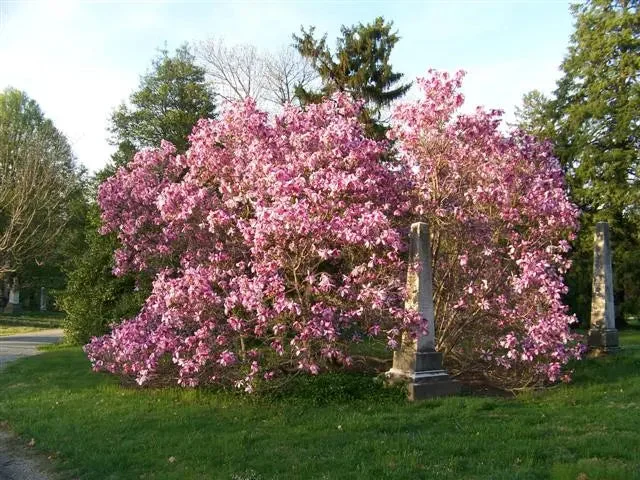
It helps to remember what you are buying toward. A mature Betty reaches about 10 to 15 feet high and 8–12 feet wide according to the University of Minnesota, with large purplish pink flowers with 12–18 tepals. That is a long-lived tree for one spot in your yard. A bare plant that fails in its first year costs the most in the end, because you pay for it, lose a season, and buy again.
If a price looks low, ask whether the roots had a pot or a plastic wrap. A cheap Betty that arrives dry is not a bargain.
Does Betty Magnolia Ever Come Balled and Burlapped?
Yes, sometimes. Balled and burlapped, usually shortened to B&B, is the second form magnolias come in, and it solves part of the drying problem that bare-root cannot.
What Balled and Burlapped Means for This Tree
A B&B plant is dug from the field with a ball of its own soil, and the ball is wrapped in burlap, often with a wire basket around it. The roots stay in soil, so exposure is limited. The trade-off is that the digging cuts through the wide root system, and a magnolia does not like that.
An established magnolia has to be root pruned a full year before moving. Good growers who offer B&B magnolias prepare the plant that way, and the form is mostly seen on larger trees. Ask when the plant was root pruned if you are offered a ball.
How a Ball Differs From a Pot
The table below compares the three forms on the points that matter most for Betty.
| Form | Roots | What to know for Betty |
|---|---|---|
| Bare-root | No soil, exposed | Not a sound choice for fleshy roots, so you will not find it offered |
| Container | Intact, in potting mix | The usual form, with circling roots as the main thing to check |
| Balled and burlapped | Cut at digging, held in field soil | Heavy to move, best with a plant root pruned a year ahead |
Handling a Ball at Home
Set a ball in the hole and plant it quickly, because the roots have already lost some of their reach. Follow the steps in our guide to planting a Betty Magnolia tree, and check with your local extension service for the planting window in your area. Cut away the wire basket and any synthetic wrap, since those do not rot.
Container Trees Still Get Transplant Shock
A pot removes the drying risk, which leads many buyers to assume it removes shock entirely. It does not. It swaps one problem for another.
Where Pots Cause Their Own Trouble
A container plant has spent its life inside a wall. Roots grow outward until they meet plastic, then turn and follow the edge. Thick magnolia roots make this worse because they do not bend easily, so they tend to hold the shape of the pot long after planting.
In our rows, the plants that struggle after planting are rarely the ones that dried out on the way. They are the ones whose roots stayed in the shape of the pot.
Loosening Circling Roots at Planting
Slide the plant out and look at the outer layer of roots. If they wrap the ball, loosen them by hand. Work gently and quickly, and keep the roots out of sun and wind while you do it.
- Tease the outer roots away from the ball with your fingers, working from the bottom up.
- If a root mat is tight and will not separate, make a few shallow vertical cuts through it so the roots can point outward.
- Spread the loosened roots in the hole and plant at the same depth the tree sat in the pot.
- Water well after planting and keep the soil evenly moist, as our guide to watering Betty Magnolia describes.
If you plan to keep the tree in a pot long term, the rules change, and our page on growing Betty Magnolia in a container covers that case. A newly planted tree will still show some shock in its first season, and a well-loosened root ball keeps it mild.
Expect the first spring to be quiet in the roots even if the buds open on schedule. Flowers run on stored energy, so a good bloom in year one does not prove the roots have settled. Judge the planting by how the tree leafs out and grows through summer.
Buying Betty Magnolia Well, Whatever the Package
You now know which forms to expect. The remaining job is judging an individual plant, and the same checks work for a pot or a ball.
A Short List for the Nursery
Take this list with you and use it before you pay.
- Tip the pot and look at the drainage holes. White or pale tan roots that are firm to the touch are healthy, while brown, soft or foul-smelling roots are a warning.
- Check the soil. It should be damp and fresh smelling, not bone dry and not soggy.
- Look for roots wrapped around the inside of the pot. A few at the edge are normal, but a solid mat is a reason to choose another plant or to plan on loosening it.
- Hold the pot or ball, not the trunk, when you move the plant. A trunk that wobbles in the soil means the roots have been disturbed.
- Check that the tag says Betty. Our guide to the container sizes and what to look for in a Betty Magnolia covers pot sizes in more detail.
Handling on the Way Home
Keep the plant upright and out of wind on the drive, and plant it within a few days. If the weather will not allow planting, leave it in the pot and keep the soil moist. A potted Betty tolerates a short wait, which is one more reason the pot is the right package.
A Pot Is How Betty Magnolia Reaches Your Yard Alive
Betty comes in a container because its fleshy roots dry out and die back where roses and fruit trees would recover. A bare plant is cheaper only on paper, since a failed tree costs far more than a potted one. Balled and burlapped is a sound second choice if the plant was root pruned ahead, and a container plant still needs its circling roots loosened at planting.
Betty Magnolia
Nursery-grown Betty Magnolia in sizes from 1 Gallon Shrub, shipped to your door.
From $80.55
Shop Now →The one thing to do before you pay is tip the pot and look at the roots. On our farms, Betty gets full sun and acid to neutral soil, and its roots stay in soil from the first day to the day you plant it. We are growers who raise and sell top-quality trees and shrubs, and that is how we like to hand them over.