Using Mycorrhizal Fungi When Planting Betty Magnolia
Picture a small jar of mycorrhizal inoculant sitting beside the receipt for a new Betty magnolia, and ask whether it earns its place on the bill. For most ornamentals the honest answer is no. Betty is a little different, because magnolias belong to an ancient family whose roots are coarse and carry few or short root hairs.
Researchers suspect trees with roots like these lean on soil fungi to do their foraging, which makes inoculation a plausible help for a young Betty. Plausible is not proven, and the jar costs real money.
This guide covers everything you need to know about inoculating Betty at planting, from how the fungi work and what the products cost, to the soils where you can skip the jar and what to budget over five years.
Betty Magnolia Roots and the Fungi Already There
Before you buy anything, learn what mycorrhizal fungi are and what your soil may already be doing for the tree. This section covers both, plus the one reason Betty gets more attention than most landscape trees.
What Mycorrhizae Do
Mycorrhizae are fungi that live on and inside tree roots. Their fine threads, called hyphae, spread through the soil well beyond what a root can reach and carry water and nutrients back to the tree. In return the tree feeds them sugars. Nearly every tree you plant makes this trade, and most do it without help from a jar.
Why Betty Gets the Question
Penn State's root ecology lab hypothesizes that tree species with magnolioid-type roots, coarse with few or short root hairs, forage mainly through mycorrhizal fungal hyphae. Note the word hypothesizes. It is a research question, not a reported finding, and we treat it that way.
Betty is also compact, 10 to 15 feet high and 8 to 12 feet wide, so the root zone you are trying to colonize is modest. That keeps the amount of product small, which matters once we get to cost.
What Your Soil Probably Hosts
Ground that has carried trees and shrubs for years usually holds fungal threads and spores already. A Betty planted beside a mature tree or into an old bed has a good chance of meeting those partners in its first season. That is the baseline any product has to beat, and in healthy garden soil it is a hard one to beat.
The fungi also need living roots to survive. A bed that sat bare or paved for years may hold few of them, because the fungi starve without a host. Ask what the spot was doing before you dug.
Granular Inoculant Products and What They Cost
Granules are the product most people reach for, and they are the easiest to place correctly. Read the label first, then apply them where they will actually touch roots.
Reading the Label
Labels differ more than prices suggest. Check three things before you compare cost.
Named fungi. The label should list fungal species, not just "beneficial microbes" or "soil conditioner".
A stated count and a date. Look for a spore or propagule count per unit and a use-by date. The fungi are alive, and they age in the bag.
No added fertilizer. Skip any blend with a feed mixed in. Phosphorus in the mix works against the fungi, as the fertilizer section below explains.
Working Out the Real Unit Cost
Divide the shelf price by the number of trees the label says one container treats at the stated rate. Betty's small root ball uses a small share of a big bag, so buy the smallest pack that covers your planting. A large bag left in the garage for years loses its value, and the saving was never real.
Write the figure down as a cost per tree. It gives you a number to compare against gels, and later against the budget table below.
Applying Granules at the Planting Hole
Granules only work when they touch living roots. Follow these steps alongside the site and timing advice in our Betty planting guide.
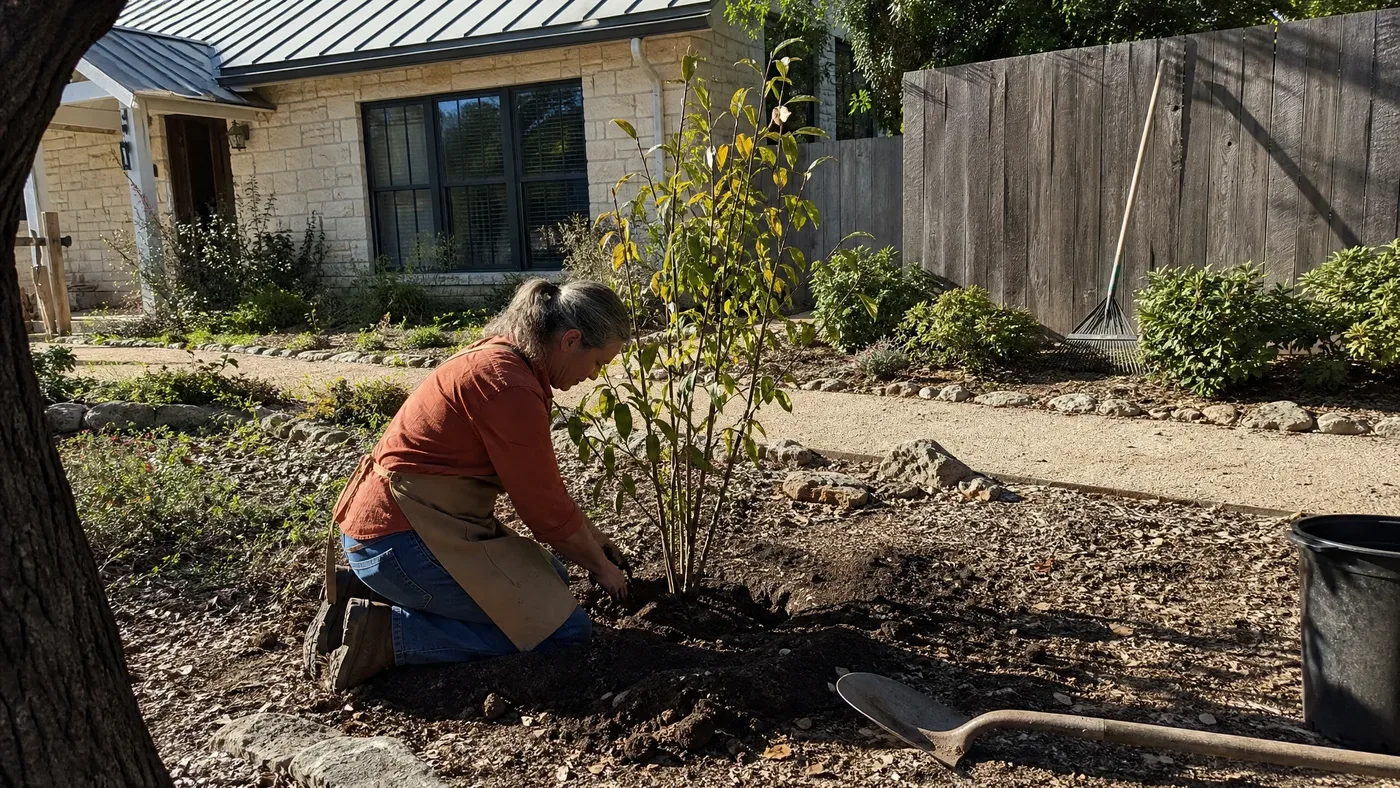
- Dig the hole as deep as the root ball and wider than it, and keep the native soil you remove.
- Slide the tree out and loosen the outer roots with your fingers so they point outward.
- Sprinkle the granules at the label rate directly onto the loosened roots and the sides of the root ball.
- Backfill with the native soil. Do not mix in rich compost or bagged feed.
- Water slowly until the soil settles, then mulch without piling it against the trunk.
Root Dips, Gels and Other Delivery Tools
Granules are not the only way to put fungi on a root. Dips, gels and watering-in each trade cost, contact and convenience differently.
Dips and Gels
A dip or gel coats the roots in a slurry of fungal material, so every root surface you wet gets contact. That is the best placement of any method. The trade-offs are a short working window, since you should plant soon after mixing, and a messier job. Compare unit cost the same way you did for granules, because gels are often sold in smaller amounts.
Dips make the most sense for a bare-root or field-dug tree. For a container-grown Betty, tease the outer roots loose and work the gel into them. Our Betty trees arrive container-grown with a full root ball, so the granule route is the simpler one for most of our customers.
Watering In
Some products dissolve in a watering can and are poured around the tree after planting. They are the cheapest tool to own and the least reliable. The fungi land on the soil surface and have to be carried down to the roots by water, and in dry or compacted ground most never get there.
Which Tool We Would Choose
If you decide to inoculate, use granules or a gel placed directly on the roots, and treat watering-in as a supplement at best. Skip anything that cannot say which fungi it contains. And do not stack all three methods on one tree. One good placement beats three thin ones, and the extra spend buys nothing.
Soil Conditions Where Betty Magnolia Gains Nothing
Soil decides whether the jar matters. Some sites make inoculation nearly pointless for Betty, and others make it the most sensible few dollars you spend.
Established, Rich Ground
If your bed has grown shrubs and trees for years and the soil is dark, crumbly and full of worms, skip the product. The fungi are already there. A Betty planted here gains almost nothing from added spores, and the money does more good spent on mulch and watering.
Fresh Fill, Stripped Subsoil and Compaction
We often see Betty planted into new-build lots where the topsoil was scraped off and replaced with fill. Fungal life in that kind of ground is thin, and this is where inoculation has the strongest case. Loosen compaction first, though. Fungi cannot fix soil that roots cannot enter or that stays waterlogged.
Soil Chemistry the Jar Cannot Fix
Betty suits acid or neutral soil. Inoculant does nothing about a pH that sits outside that range, or about drainage. Sort both out first with our guide to soil, drainage and pH for Betty, then decide whether fungi are still worth adding.
Fertilizer and Fungicide That Undo the Work
You can pay for inoculant and then cancel it with the next bag or bottle you open. Two kinds of input do the most damage.
High-Phosphorus Feed
A tree with easy access to phosphorus has less reason to feed fungal partners, and the partnership weakens. That includes the "starter" and "transplant" fertilizers sold for planting holes. Common advice says to mix one into the backfill. We do not, for any Betty we plant, whether inoculated or not. Our Betty feeding guide covers what to use and when.
Fungicides
Broad-spectrum fungicides and soil drenches can knock back beneficial fungi along with the target disease. Read the label before using one near the roots, and apply it only to a problem you have actually identified. If you are worried about rot, drainage is the first fix, and our guide to root rot in Betty's shallow roots explains how.
Disturbance
Fungal threads are slow to rebuild. Repeated digging, tilling around the root zone or leaving the ground bare all set them back. Keep a mulch layer in place, plant companions around the edge instead of crowding the roots, and leave the soil alone after planting.
Budgeting Betty Magnolia Inoculation Over Five Years
Inoculation is a one-time purchase, not a subscription, so the useful way to judge it is over several years. This table lays out what you spend and what to watch, assuming one tree.
| Year | Spend | What to do and watch |
|---|---|---|
| 1 | The one purchase: granules or gel | Apply at planting, skip starter feed, water through the first season. |
| 2 | Nothing | Note new shoot length and leaf color, and photograph the tree in April. |
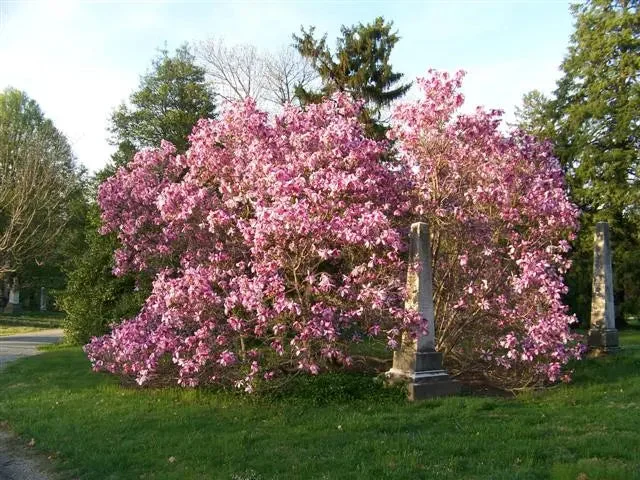
| 3 | Nothing, unless a soil test is needed | Look at the bloom, large purplish pink flowers with 12 to 18 tepals, and compare your photos. |
| 4 | Nothing | Keep mulch topped up and avoid soil disturbance. |
| 5 | Nothing | Judge whether the tree is established and settled into its mature habit. |
The price of the jar spread over those years is small, and it only grows if you plant a row of Betty trees. Multiply the unit cost by the number of trees before you commit.
What You Can Honestly See
With a single tree and no untreated twin, you cannot prove the jar worked. A vigorous year two could be fungi, a mild winter or good drainage. We tell customers to treat the spend as insurance on a hard site, not as a purchase with a measurable return.
Where the Money Does More
Set the jar against the other costs of those five years: mulch, a soil test, and the water a young tree needs. If the budget is tight, those come first, because each one has a clear effect on a new planting. Inoculation is the item to add once the basics are covered, not the one that replaces them.
Is Inoculating Betty Magnolia Worth the Money?
Our answer depends on the site, not the tree. The evidence for magnolia roots is a hypothesis, so we give weight to the ground you actually have.
Spend When
Buy inoculant if the site is new fill, stripped or compacted subsoil that you have loosened, or ground that has never carried trees. Also consider it for a Betty that has sat in a container with no contact with garden soil. In these places the fungal baseline is low and a small spend is cheap insurance.
Skip When
Skip it in established beds, near mature trees and in rich, well-worked garden soil. Put that money into the basics, starting with a steady watering routine for new plantings. Those basics affect Betty's first years more than any jar can.
A Rule of Thumb for Your Betty Magnolia Budget
Betty's coarse roots give the fungi a plausible job, but the evidence is thin, and most garden soil already supplies them. Choose granules or gel on the roots, keep phosphorus and fungicide away, and judge the result over years, not weeks.
Betty Magnolia
Nursery-grown Betty Magnolia in sizes from 1 Gallon Shrub, shipped to your door.
From $80.55
Shop Now →The rule we give customers: buy the inoculant only if the planting site is new fill or loosened subsoil with no mature trees nearby, and you are willing to skip starter feed and routine fungicide. Otherwise, keep the money. Every Betty we ship leaves our farm in a full, intact root ball and is packed to travel, so it arrives ready to plant. We are a small business, and growing top-quality trees and shrubs ourselves is the whole of what we do.