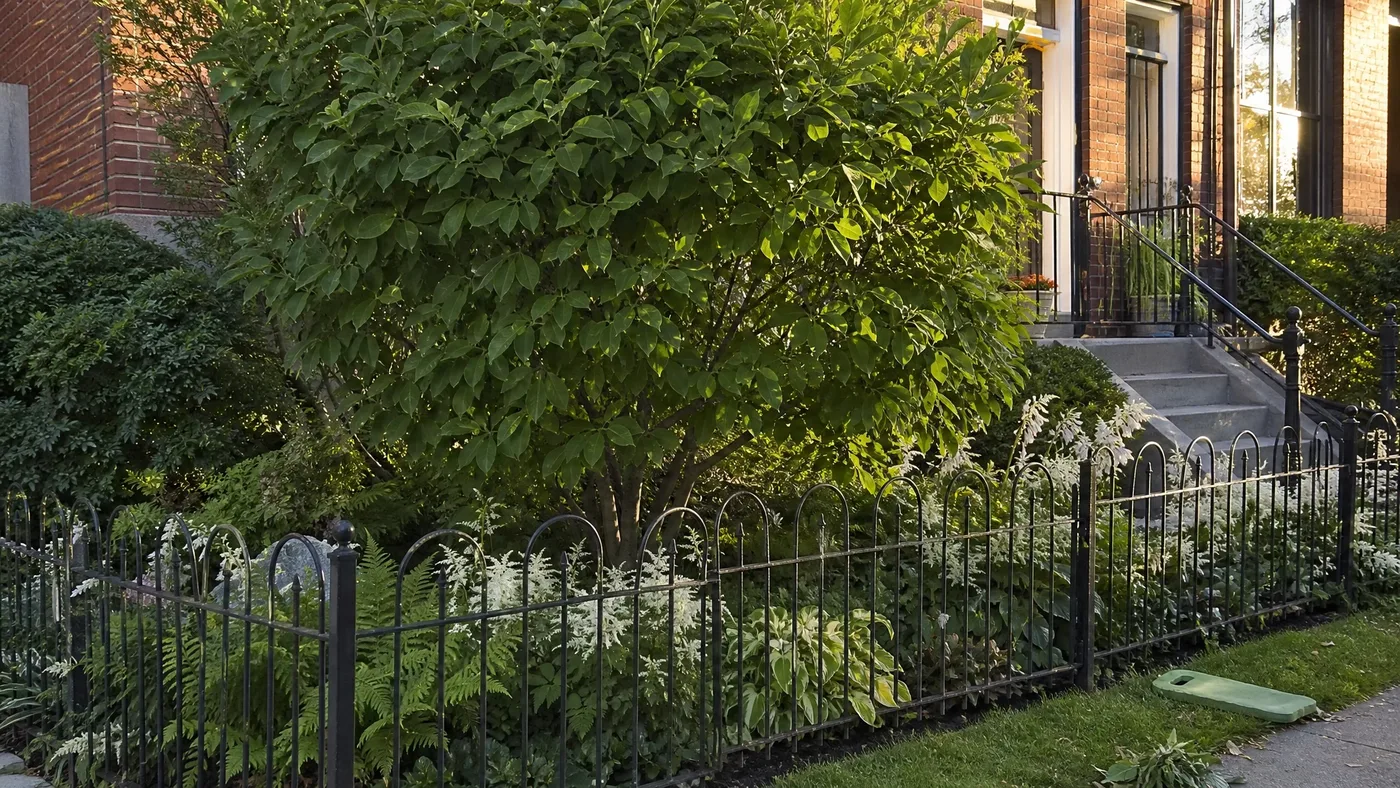
Shade-Tolerant Plants to Grow Under a Mature Betty Magnolia
Stand under your Betty Magnolia in July and check three things: how dark it is, how dry the soil is and how close the roots lie. Those answers decide what survives down there. Plant the wrong thing and it sulks, while every replanting disturbs the shallow roots of a tree that did nothing wrong.
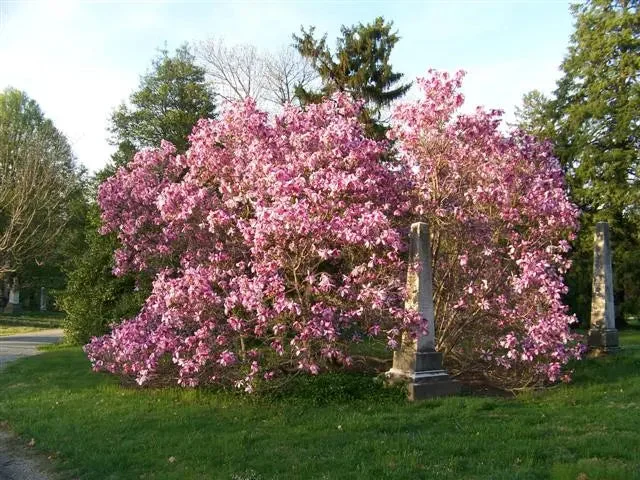
The spring bulbs we suggest in our landscape ideas for Betty Magnolia work because they finish before the leaves open. A mature Betty, around 10 to 15 feet high and 8–12 feet wide, holds that leafy canopy over the ground all summer. Bulbs fade under it, and summer shade plants have to take over.
In this article, we'll go through four common yards: a narrow side bed, a windy corner, a pot on a hot deck and the dry ground under the canopy edge. Then we'll help you match your own yard to one of them.
A Narrow Side Bed Under Betty Magnolia
A strip between a fence and the trunk is the tightest case. There is little room, the roots fill most of it and the fence adds its own shade. Plant low and plant small.
Check the Fence First
Before you buy anything, see what the fence does to your strip. It changes the light and the moisture, and both change what you should pick.
In mid-April, when Betty opens its large purplish pink flowers, this strip is still bright because the branches are bare. By July the same strip is dim. A solid fence on the sunny side can also bake the strip and block part of the rain. If the soil is damp a trowel's depth down, you have an easy bed. If it is dry, go to the dry-shade picks later in this guide.
Low Perennials That Fit
Choose plants that stay below the lowest branches and knit together without crowding the trunk. Each of these has a reason to be here, and the first two are timed to Betty's own bloom.
- Hellebores. The leaves stay handsome through winter, and the nodding flowers open in early spring, just as Betty's blooms come out overhead.
- Foamflower. It forms a neat, low carpet and sends up airy spikes in late spring, after the magnolia petals have dropped.
- Wild ginger. Its broad, soft leaves cover bare soil under the branches and stay cool to the touch on a hot afternoon.
- Sweet woodruff. It spreads at a steady pace, and a fence keeps it from wandering far. Crushed leaves smell of fresh hay.
Planting Among Shallow Roots
Betty's roots sit close to the surface, so how you dig matters more than what you plant.
University of Vermont Extension advises you to avoid spades and shovels that could cut or nick roots, and not to remove larger roots. Use a hand trowel, choose small starts and slide each one into gaps between roots. Pick perennials, not annuals, so you are not digging again next year. Finish with a thin mulch layer kept off the trunk.
Common advice says to dig and amend the whole bed first. Skip that here, because tilling a bed under a magnolia cuts more roots than any plant is worth.
Spacing and the First Summer
A narrow bed fills in slowly, and that is fine. Resist the urge to pack it.
Set small plants a little closer than the tag suggests only if you are willing to thin them later, and keep every plant clear of the trunk so air can move around the base of the tree. Water new starts by hand along the fence line, where the soil dries first. Expect the first summer to look sparse. By the second, the strip should start to cover itself.
Betty Magnolia on a Windy Corner Lot
Wind dries foliage and soil faster than shade cools them. On an exposed corner, the plants under Betty need leathery leaves and a low profile.
What Wind Does to This Spot
Betty is hardy in zones 4–8, and the University of Illinois lists it as hardy to zone 4b. Cold is rarely the issue on a corner lot. Drying is.
Steady wind pulls moisture from the shallow root zone and from every leaf below it. The canopy breaks up the gusts at ground level, but the open corner still funnels air along the ground. In our experience, plants here fail from thirst long before they fail from cold.
What Holds Up in Steady Wind
Pick plants with tough, low foliage that can flex without tearing. They also hold the soil in place when the wind picks up.
- Sedges. Fine, arching blades shed wind instead of fighting it, and they rustle softly in summer.
- Epimedium. Wiry stems carry tough leaves, and the small spring flowers hide beneath them.
- Christmas fern. The leathery fronds stay green through winter and do not shred.
- Hellebores. They shrug off gusts, and their flowers hold up well in cold, windy weather.
What to Leave Out
Some popular shade plants look good in a sheltered bed and poor on a corner. Skip them here.
Large, thin-leaved hostas tatter in wind, and delicate ferns such as maidenhair crisp at the edges. Tall, soft-stemmed perennials flop and drag across the soil. If a plant looks fragile in the nursery pot, it will look worse in July on a windy corner. Put your toughest plants on the windward side and let softer ones tuck in behind them.
Using Betty as the Windbreak
At 10 to 15 feet, Betty is not a tall screen, but its branches reach out low and its dense summer leaves do slow the air near the ground.
Plant the sturdiest groundcovers on the side the wind arrives from, and tuck anything softer into the lee of the trunk. A thin layer of mulch keeps the surface from drying out between waterings. Do not pile it deep, because a deep layer over shallow roots holds too much wet against the base of the tree. If a bad gust damages new growth in spring, leave the tree alone. Our pruning guide explains why Betty needs little cutting.
A Pot on a Hot Deck Near Betty Magnolia
A container beside the deck gives you shade color without disturbing a single root. It also gives you a watering problem, because a deck bakes the pot while the magnolia wants steady moisture.
Compact Plants for a Hot Pot
Choose plants that stay compact and have some drought tolerance, since pots dry out quickly.
Heuchera, with leaves in deep burgundy and lime, keeps color for months. Japanese forest grass moves in the slightest breeze. A small hosta handles shade well if the pot is large enough to hold water. Pair a mounded plant with one that trails. If you plant more than one in a pot, match their water needs.
Pot Size and Potting Mix
A bigger pot is more forgiving on a hot deck, because more soil holds more water and heats up more slowly.
Fill it with a quality potting mix, not soil dug from the bed, which packs down and drains badly in a container. Leave an inch or two of space below the rim so water soaks in instead of running off. Skip water-holding crystals, which can leave the mix soggy after rain. A pot that feels light when you lift it is a pot that needs water.
Water the Pot, Not the Tree
Keep the pot's runoff away from Betty. A tree with shallow roots does not like sitting wet.
Water the pot slowly at its own base, and stop when water runs from the drainage holes. Set it on pot feet so it drains freely. Place it a little way out from the trunk so overflow runs onto the deck or lawn rather than into the root zone. Our root rot guide explains why wet feet are the real threat to Betty.
Heat and Winter Care
Dark pots absorb deck heat, so a lighter-colored pot keeps the roots cooler. Check soil with a finger most days in midsummer, because wind and hot boards dry a pot faster than a bed.
Roots in a container are less protected in winter than roots in the ground. Ask your local extension service which perennials overwinter in pots in your zone. If you are also growing the magnolia itself in a pot, our guide to growing Betty Magnolia in a container covers that side.
Dry Roots Under Betty Magnolia's Canopy Edge
The driest ground sits near the trunk and under the drip line. Betty's own shallow roots take the water first, and the leaves shed rain outward. Treat this as dry shade and pick plants built for it.
Why the Soil Runs Dry
Rain hits the canopy and runs to the edge of the branches. The roots then take up what reaches the surface. Plants beneath have to compete for the little that is left.
One of the most common questions we get is why nothing grows near the trunk. The answer is usually competition, not too little light. A thin cover of plants with a light mulch does better than a thick one.
Plants That Take Dry Shade
These plants tolerate both shade and dry soil once established. They are our dry-shade group.
- Bigroot geranium. It forms dense mats and smells pleasantly aromatic when you brush the leaves.
- Barrenwort (epimedium). It takes dry shade once its roots settle in.
- Lilyturf. Its grassy foliage stays tidy, and it fills gaps between roots.
- Sedges. Many cope with dry shade and fit between roots without competing hard.
Leave the Trunk Collar Clear
Near the trunk, the temptation is to plant right up to the bark. Do not.
Keep a bare ring around the base so the collar stays dry and you can see it. Start your plantings out toward the middle of the canopy and let them spread inward on their own. Magnolia bark is thin, and roots that hug the trunk are the ones you are most likely to nick with a trowel. Where Betty has several stems, leave a little extra room around each.
Getting Them Established
Even dry-shade plants need help in their first year. Water is what gets them past it.
The University of Vermont recommends a weekly, deep watering in hot summer months so new underplantings and the tree both get enough. Our guide to watering Betty Magnolia covers the tree's side of it. Keep mulch thin and off the trunk. For more, see best soil for Betty Magnolia.
Choosing Among These Yards Under Betty Magnolia
Most yards are a mix of these cases, so match each part of your yard to the one it resembles most. Use what you found in July.
Match Your Yard to a Case
This table pairs what you find under the canopy with where to start.
| What you find | Start with | Skip |
|---|---|---|
| Narrow strip, moist soil | Hellebores, foamflower, wild ginger | Tall plants that crowd the trunk |
| Open corner, steady wind | Sedges, epimedium, Christmas fern | Large hostas, maidenhair fern |
| Hard surface or deck | Pots of heuchera, forest grass, small hosta | Pots that sit in a saucer of water |
| Dry soil near the trunk | Bigroot geranium, lilyturf, sedges | Moisture-loving perennials |
When Two Cases Overlap
If your corner is both windy and dry, pick from the dry-shade group, since dryness is what kills plants first. If your bed is narrow and dry, use the dry-shade group but keep to the smallest starts.
If shade is the only problem, the narrow-bed list works almost anywhere. Spring bulbs can still go under a mature Betty if you accept that they will fade over time.
Reading the Plants After One Summer
Your plants will tell you whether you chose well. Look at them in late August, when the canopy is at its fullest.
Crisp, browned leaf edges point to dryness or wind, so move toward the dry-shade group. Stretched, floppy growth with few flowers points to too little light, so thin the canopy only if the tree needs it, and otherwise choose a tougher plant. Yellowing and mushy crowns point to wet, which sends you back to drainage. Change one thing at a time so you know what worked.
Plant One Trial Patch Under Betty Magnolia
Here is the one-line test: if the soil stays dry past two inches, pick from the dry-shade group. Otherwise, choose by the shape of your yard. Before you commit to a whole bed, plant a single trial patch and watch it through one summer.
Betty Magnolia
Nursery-grown Betty Magnolia in sizes from 1 Gallon Shrub, shipped to your door.
From $80.55
Shop Now →Before a plant leaves us, our growers check the roots, the structure and the buds on every Betty, so the tree you plant is sound and ready to share the ground with whatever you put beneath it.