Growing Betty Magnolia as a Single-Trunk Tree or Shrub
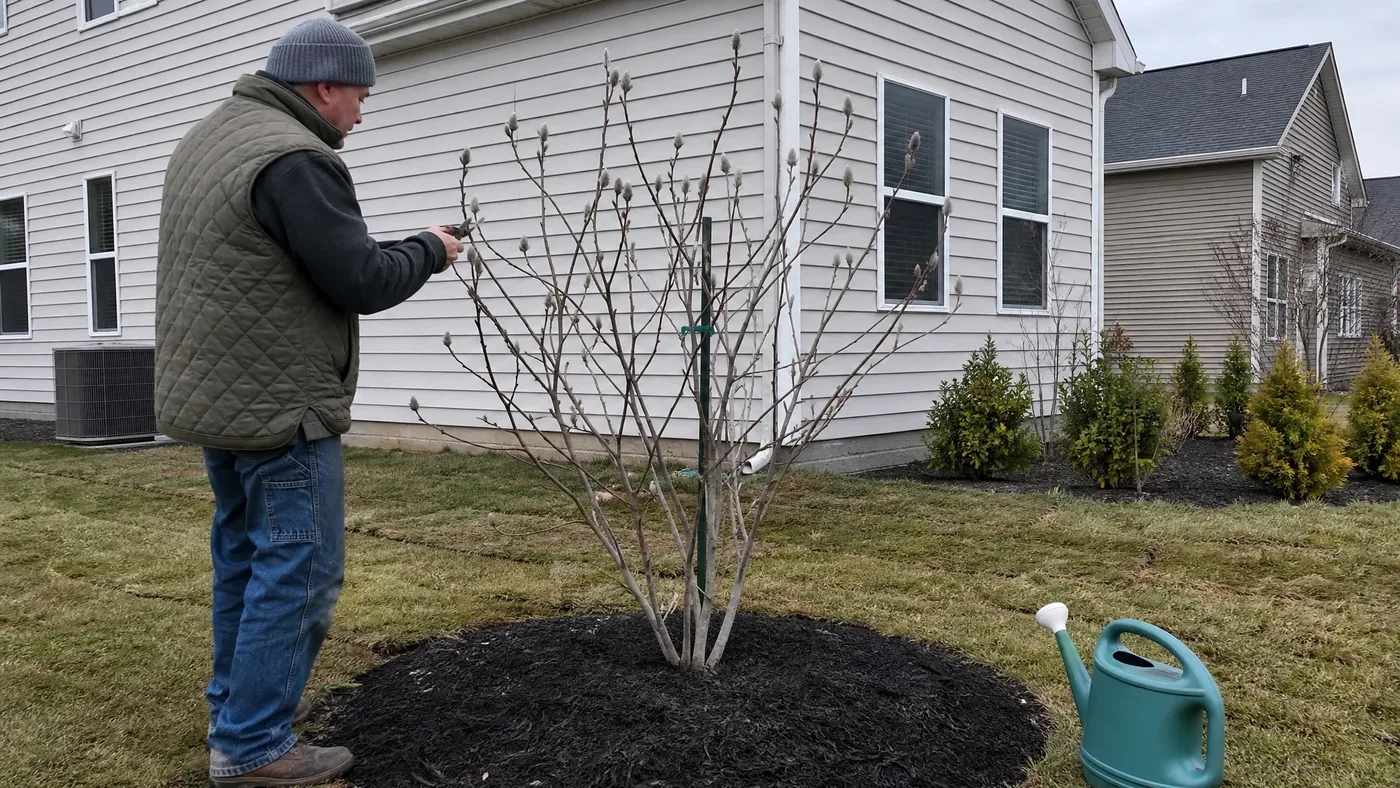
We still remember an afternoon in our own garden. We stood over a young Betty, barely knee high, with five stems rising from one crown and loppers in one hand, and decided what she would become. Neither of us moved for a long while, because we knew the choice would follow us for years.
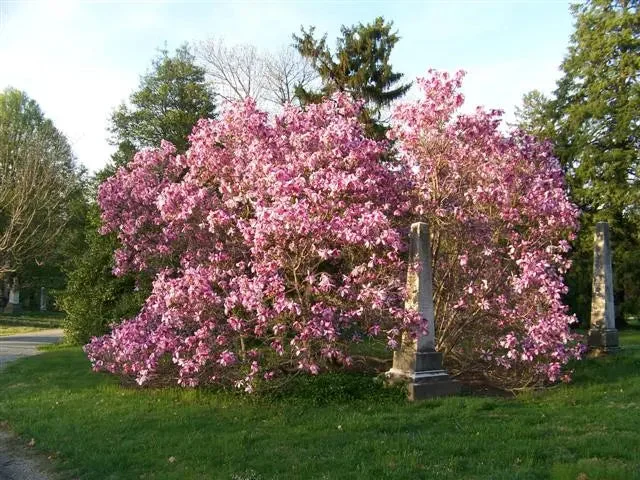
It will follow you too. The stems you keep now become the frame you live with for years, and a frame set badly is slow to undo.
This guide covers everything you need to know about shaping a young Betty, from choosing tree or shrub to selecting stems, setting branch height and working through the first three winters.
Choosing a Form While Betty Magnolia Is Still Small
Make this call first and make it early, because every later cut depends on it. Betty will grow into either form, and the pot she comes in will not tell you which one suits your yard.
What Betty Does If You Leave Her Alone
Betty is a vigorous, rounded, deciduous shrub that sends up several stems from the base. That is how she grows and how she is sold. Turning her into a single-trunk tree means picking one leader from those basal shoots over the first two or three years, a step most single-trunk ornamentals never ask of you.
Size stays the same in either form. Betty reaches 10 to 15 feet high and 8 to 12 feet wide by one account, while the University of Illinois gives her height as 15 to 20 feet. Ask your local extension service what plants in your area actually reach. Tree form lifts the crown, but it does not narrow it.
Match the Form to the Space
Ask yourself what you want to stand under and beside her. The answer settles most of this decision.
A tree leaves room beneath for bulbs, a bench or a path, and it carries the large purplish pink flowers up toward a window. A shrub keeps those blooms within arm's reach and fills a corner or a screen right down to the ground. Read our guide to how big Betty magnolia gets before you fix a spot.
If you cannot name what you would plant or place under her crown, keep the shrub. It asks less of you and of her. We grow Betty with several stems already up, so the decision is waiting for you the day she arrives.
The choice: decide now, while the stems are still thin enough for hand pruners, and let your space decide it, not the picture on a tag.
Deciding How Many Stems to Keep
Stem count is the real difference between the two paths. One stem makes a tree, and several make the shrub Betty wants to be.
The Single-Leader Path
Kneel down in the first dormant season after planting and look at the base. Choose the straightest, strongest stem that rises closest to the center of the crown, and ignore the tallest if it leans. Remove multiple leaders where a single leader is desirable, and Betty is exactly that case.
Do not take every competing stem in one sitting. Keep the leader and one spare, shorten the spare so it cannot compete, and take it out the next winter once the leader has proved itself. Customers usually ask us whether cutting healthy stems will set a young plant back. A young Betty carries more shoots than she can use, and small cuts at this size cost her very little.
The Multi-Stem Path
If you are keeping the shrub, you still make a selection, only a lighter one. Leave the stems that spread evenly around the base and remove any that cross or crowd the middle.
Resist the urge to thin hard. Betty's rounded, full-to-the-ground shape comes from a dense set of stems, and a gap cut now will stay visible for many seasons.
Watch for New Basal Shoots
The work does not end after the first winter, because a young Betty keeps sending up fresh shoots from the crown.
On the tree path, cut each new basal shoot back to its point of origin while it is still green and pencil thin. Wait too long and it hardens, which turns a two-second job into a sawing one. Cutting flush leaves no stub to sprout again. On the shrub path, keep the shoots that fill a gap and take the ones that crowd the center.
The choice: one leader and one spare for a tree, or every well-spaced stem for a shrub. If you are still torn, keep the extra stems another winter, since you can always remove a stem later but you cannot put one back.
Setting the Lowest Branch Height for Betty Magnolia
This decision belongs to the tree path only. Betty branches low by habit, and where you clear the trunk decides whether she reads as a small tree or a tall shrub on a stick.
Pick a Height for the Space
Think about the walking, mowing or sweeping that will happen under her. Her crown will reach 8 to 12 feet across, so a branch that starts low on the trunk sweeps a long way out and into your path. Clear the trunk to the point where you can pass beneath without ducking, and no higher.
Going higher than that costs you. Betty tops out around 10 to 15 feet, so a tall bare trunk leaves a small crown perched on top and strips away the wide, rounded look that suits her. Keep more crown than trunk.
Lift in Steps, Not in One Cut
Do not strip the trunk bare in a single winter. Small side shoots along the lower trunk feed the leader and help it thicken, so shorten them in the early years and remove them one by one as the trunk firms up. Take the lowest branch first and work upward over the seasons.
Check the lift against the planting depth too. A tree set too deep hides the trunk flare and makes every height look wrong, and our guide on planting a Betty magnolia tree covers how to set the root ball so the trunk starts where it should.
The choice: clear to walking-under height and stop there, then let the crown fill in above it.
Training Betty Magnolia Through the First Three Winters
With the leader chosen and a height in mind, spread the work across three winters. Betty blooms on last year's wood, so every cut in winter has a small price, and the way to pay it is to keep each cut small.
Timing and the Bloom You Give Up
At planting, remove only damaged wood. Then begin training during the dormant season following planting. You can see the whole structure of a bare plant, which is why we do the selecting then.
You will read that magnolias never want a cut. For a mature shrub that is close to right, but a young tree-form Betty needs a few early cuts or she will stay a clump. Trimming a few buds off in winter costs you a few flowers in April, and North Carolina State University notes she blooms in mid-April.
A Three-Winter Plan
This table lays out what each winter asks of you. Treat it as a pace, not a deadline, and slow down if the plant looks stressed.
| Winter | Do | Leave alone |
|---|---|---|
| First | Pick the leader, shorten the spare, remove other basal shoots | Side shoots on the lower trunk |
| Second | Remove the spare, take off the lowest branch, clear suckers | The upper crown |
| Third | Reach your final lowest branch height, remove crossing branches | Everything that is spaced and healthy |
Each winter, also remove suckers coming up from the roots or low on the trunk, as the extension guidance directs. Our pruning guide on how and when to prune Betty magnolia goes into the cuts themselves.
Making Each Cut
A clean cut heals faster, and on a young magnolia with thin bark that matters.
Use sharp bypass pruners for stems up to pencil width and loppers for anything thicker, and wipe the blades between plants. Cut just outside the swollen collar where the branch meets the trunk, never flush and never leaving a stub. Work on a dry day so fresh cuts do not sit wet. Step back after every few cuts and look at the whole plant, because a magnolia that looks balanced from one side can be lopsided from the other.
The choice: select in the first winter, finish the lifting by the third, and then put the pruners away.
Leaving the Shrub Form Alone
The shrub path is the easy one, and for most yards we think it is also the better one. Your job is mostly to give her room and then stay out of the way.
What Little She Needs
Remove wood that is dead, broken or rubbing. If you want to shape her, do it right after she finishes flowering, because early bloomers on last year's growth are best pruned immediately after bloom. Keep the base stems. In our rows, the plants we leave alone are the ones that look most like themselves, rounded and full to the ground.
Give the Shrub What Shapes It
Without pruning to steer her, her form comes from her site. Plant her where she can spread 8 to 12 feet, and keep her away from walls and walks that would force you to cut. Our guide to Betty magnolia sun requirements will help you place her.
Betty wants moist, humus-rich, well drained soil that is neutral to acid, in sun or part shade with shelter from cold winds. Late frosts can damage her flower buds, so a sheltered corner earns its keep in zones 4 to 8. Her tulip-shaped flowers, deep red-purple outside and creamy-white within, can reach about 8 inches wide, and on a shrub you can reach every one.
The choice: if the shrub is your pick, your training is nearly done. Tidy dead wood, shape lightly after bloom and let her fill her space.
Settling on Your Betty Magnolia Form
Whichever way you went, a few seasons show it. The tree path gives you one clean trunk, a lifted crown and room underneath. The shrub path gives you a broad, rounded plant, full of stems, that holds its flowers close and needs almost nothing from you.
Betty Magnolia
Nursery-grown Betty Magnolia in sizes from 1 Gallon Shrub, shipped to your door.
From $80.55
Shop Now →Picture her in April, in either form, with bare branches suddenly crowded by large flowers, each one opening wide against a cold sky. Revisit your choice each winter, when the structure is bare, and ask whether it still fits your yard. We are a small business. Every Betty we ship is potted and packed with care so she arrives ready to plant and ready for whichever form you choose.