Betty Magnolia Pros and Cons Before You Plant One
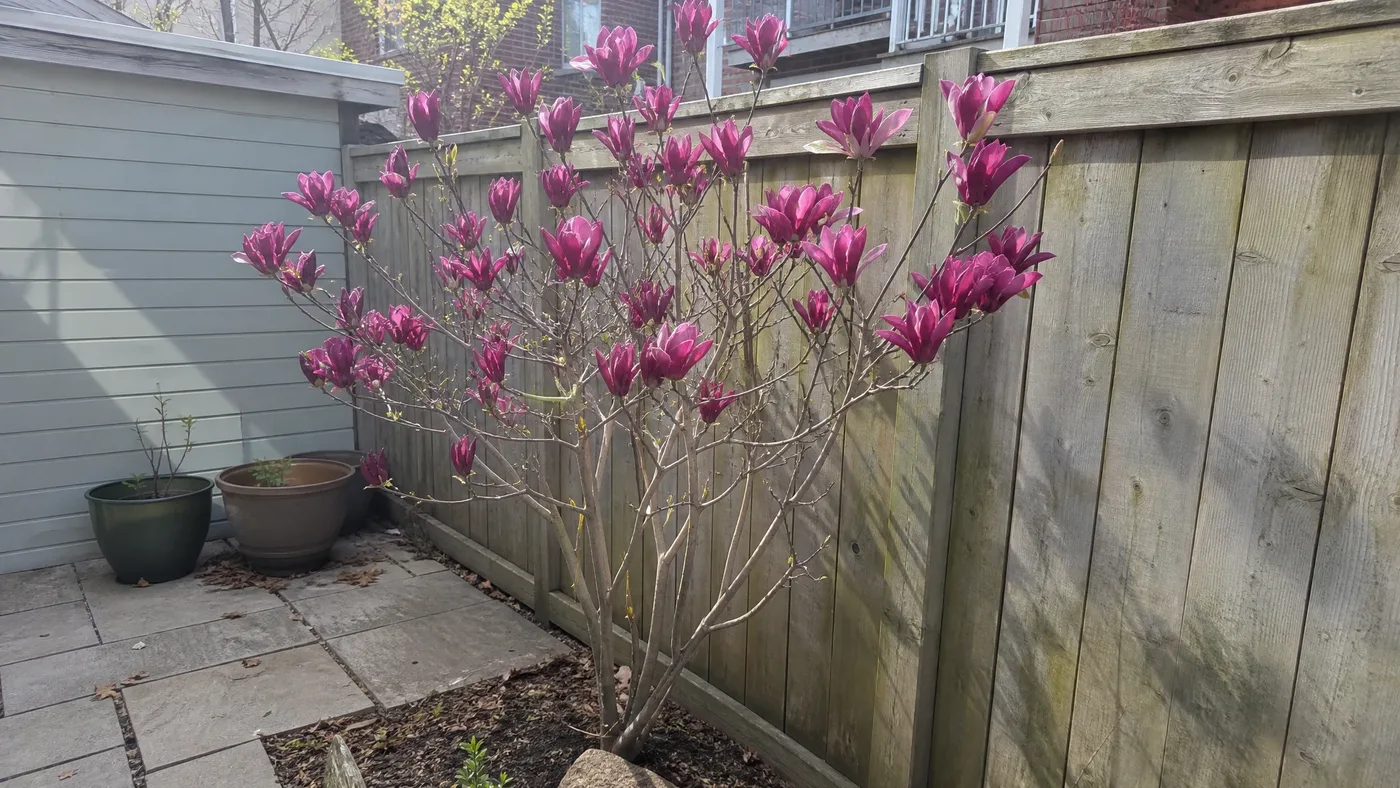
Picture a small, rounded tree at the end of winter, its branches still bare and gray, every one of them holding a goblet-shaped flower the color of red wine lit from behind. The light catches the outside of each petal and turns it nearly purple while the inside stays pale. It is the picture most photographs show you, and it is a good one. What it leaves out is how much room the tree takes, how long the display lasts and what your nose will make of it.
This article talks about Betty Magnolia's mature size, growth rate, bloom timing and color, cold and soil tolerance, fragrance and bloom length, and answers the questions customers ask us most. Read on to learn where this tree earns its place, where it disappoints and which kind of yard suits it best.
How Big Betty Magnolia Gets in a Real Yard
Size comes first, because it decides where the tree can stand and what it can frame or hide. The published numbers do not agree exactly, so here is how we read them.
What the Sources Say
The University of Minnesota describes a tree 10 to 15 feet high and 8–12 feet wide, and that is the range we plan around. It is a compact, rounded shape rather than a spreading one.
Mature height is 15–20 feet. Expect Betty to land between that and the Minnesota figure, and leave room for the taller figure if you want to be safe.
How It Fills a View
At 10 to 15 feet Betty rises to about the eave line of a one-story house and spreads wide enough to anchor a patio corner or the bend of a front walk. It will not screen a second-floor window or throw real shade across a lawn.
For comparison, saucer magnolia runs 15–33 feet high and 15–25 feet wide according to NC State Extension. Betty gives you the same flowers-on-bare-wood effect in roughly half the footprint. Its Little Girl sibling 'Ann' is smaller still, at 8 to 10 feet high and wide.
Verdict: a strong pro for small and mid-sized yards. The only real con is for anyone who wants a canopy. If you need shade or a tall privacy screen, this is the wrong tree. Our size and growth rate guide goes deeper on spacing.
Slow Growth Is a Gift for Small Spaces
Betty is slow-growing, and that one word shapes what living with it is like. It cuts both ways.
Why a Slow Tree Stays in Scale
The upside is control. A slow tree stays close to the size you planted for, so it does not crowd a window, lean over a walkway or call for a ladder every year.
For a designer's eye, this keeps the proportions of a bed intact. The low perennials, ferns and small shrubs you tuck around it stay in scale with it for years instead of being swallowed in three seasons.
Why the Impatient Will Struggle
The downside is time. No source we use gives Betty a numeric growth rate, but NC State Extension rates saucer magnolia as medium, and Betty's slow-growing habit points the other way. A young Betty will not be a bloom-covered focal point in its first season or two.
Buy the largest size that suits your budget and the planting hole, then leave it alone. Extra fertilizer will not turn Betty into a fast tree, and pushing growth is not the goal. Our buying guide explains the container sizes.
Verdict: a pro for small spaces, a con for the impatient. If your idea of a good plant is one that fills in by next summer, choose something else.
Late Purple-Red Blooms That Dodge the Frost
Bloom timing and color are the reasons people plant Betty at all, and both hold up well. This is where the tree earns most of its pros.
The Frost Advantage
Cornell reports that Betty flowers 2–4 weeks later than star and saucer magnolias, which reduces the chance of frost damage. Early magnolia flowers turn brown and limp after one hard night, and a late bloomer often misses that fate.
The trait comes from the Little Girl parentage. Betty is a cross of lily magnolia 'Nigra' and star magnolia 'Rosea', and lily magnolia blooms two to three weeks after star magnolia. It is a lower risk, not immunity, and a late freeze can still catch open flowers.
How the Color Shifts With Light
Cornell describes large reddish-purple flowers with white interiors, while the University of Illinois calls them purplish pink with 12–18 tepals. Both descriptions are fair, and the light decides which one you see.
In flat gray weather the outsides read as deep reddish-purple. In low evening sun they glow warmer, almost wine. Against a pale wall or a dark evergreen the contrast is dramatic, and the white inner faces show best as the petals open.
Verdict: the best pro on the list. You get more dependable flowers than the earliest magnolias offer and a color few spring trees match. Betty can also rebloom in summer, but treat that as a bonus.
Where Betty Magnolia Handles Cold and Wet Soil
Cold tolerance is a clear pro. Soil is a conditional pro that depends on your yard, and it is the criterion where we see the most disappointment.
Cold Hardiness
The University of Minnesota lists Betty for zones 4–8, and the University of Illinois confirms zone 4b hardiness. That makes it a dependable choice well into the northern states.
Saucer magnolia is listed to zone 9, but Betty stops at 8. If you garden in the warmest part of the country, check with your local extension service before you buy.
Wet Ground and Soil Chemistry
No source we use gives a numeric pH or says how long Betty tolerates standing water, so we stay qualitative.
Betty wants soil that drains and is not strongly alkaline. Ground that stays sodden after rain, such as heavy clay at the bottom of a slope, is the setup we would avoid, and a raised planting area is the better answer there. Our soil guide shows how to check drainage.
Verdict: cold is a clear pro, soil is a maybe. If your yard is cold, well drained and not alkaline, Betty is easy. If it holds water or runs alkaline, fix the site first or pick a different tree.
The Scent Betty Magnolia Barely Offers
This is the honest con. Many people assume a magnolia must smell wonderful, and Betty does not live up to that.
What to Expect From the Flowers
The University of Arkansas Extension says of the Little Girl series that some have a slight fragrance. That is a series-level statement, not a Betty-specific one, and it tells you to expect very little.
Customers usually ask us whether Betty smells like the big southern magnolias, and the answer is no. You may catch a faint note with your face close to an open flower, but you will not smell it from the walk or through a window.
Who Will Be Let Down
Anyone who plants a magnolia for perfume will be disappointed. What Betty gives instead is visual: the large flowers, the white interiors and the bare-wood setting. For some people that is plenty, but it is a different kind of reward. Our fragrance guide covers the details.
If you love Betty's look but still want scent in April, put a fragrant shrub that blooms in the same weeks near the seating area and keep Betty where it can be seen. Do not plant it under a bedroom window hoping the scent will drift in.
Verdict: a con. Nobody should buy Betty for its scent.
A Bloom Window That Closes Quickly
The last criterion is how long the show lasts. The bloom period runs from mid-April to early May, which is a few weeks at most, and weather can trim it further.
What Happens After the Petals Drop
That is the trade for a compact, frost-dodging tree: one concentrated burst rather than a long season. A warm spell or a hard rain can shorten it, and once the petals fall the tree turns to leaf with nothing dramatic left to show.
In our rows, the flowers look their best for a short while, and the peak passes faster than most buyers expect. Betty can rebloom in summer, but a few scattered flowers will not replace the main show.
Planning Around the Window
Make the window count. Put Betty where you will see it every day in April, such as outside the kitchen window or along the walk from the car, and set it against a backdrop that lifts the color.
Then give the area something for the rest of the year, like perennials, ferns or shrubs with later interest. Our landscape ideas guide has companion plantings that work.
Verdict: a con you can manage. If you want color over a long stretch, Betty cannot supply it. If you accept two or three good weeks, it pays back well.
Is Betty Magnolia the Right Tree for You?
Put the verdicts side by side and the pattern is plain. Betty suits a small or medium yard with cold winters and well-drained, acid to neutral soil. It is for anyone who wants a compact focal tree that stays in scale, needs little pruning and flowers after the worst frosts have usually passed. Skip it if you want fast growth, shade, a long bloom season or a tree you can smell from the porch.
Betty Magnolia
Nursery-grown Betty Magnolia in sizes from 1 Gallon Shrub, shipped to your door.
From $80.55
Shop Now →For a small front garden or a courtyard corner, we say plant it, and for a large lot where you want height or scent, look elsewhere or let Betty be one accent among several. Stand where you would put it, picture that spot at the end of winter with a purple-red glow on bare branches, and ask whether that is enough for you. Our growers watch Betty from the first swelling buds through the slow summer growth to bare winter branches, so we are glad to tell you where it fits and where it does not.